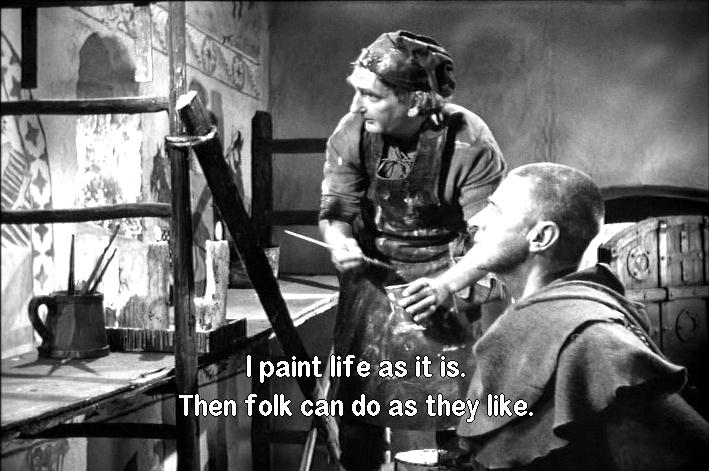
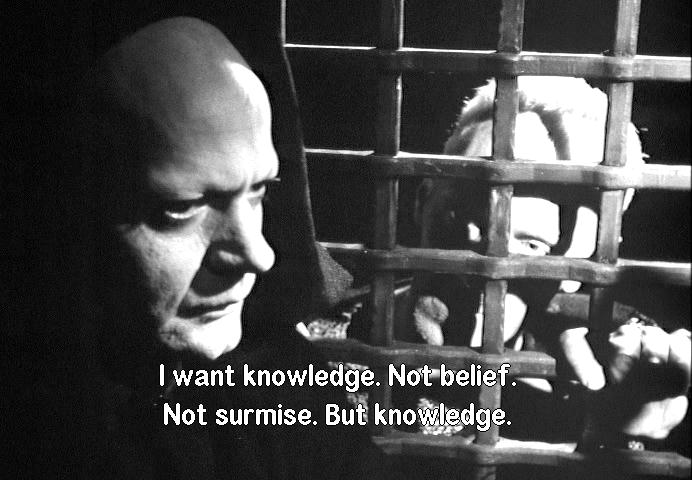
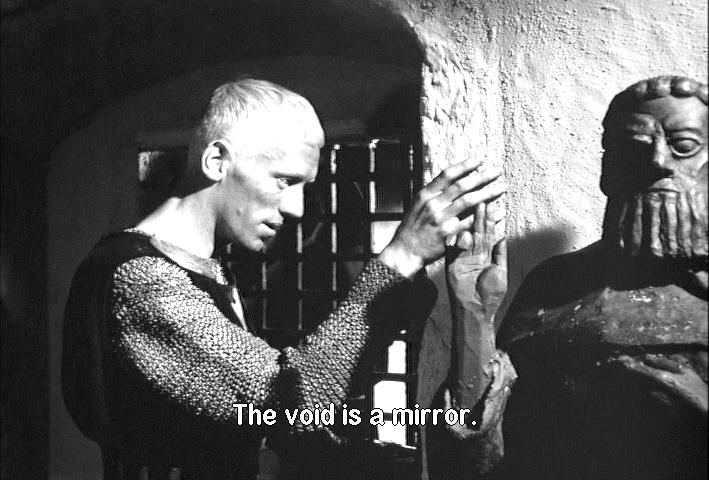
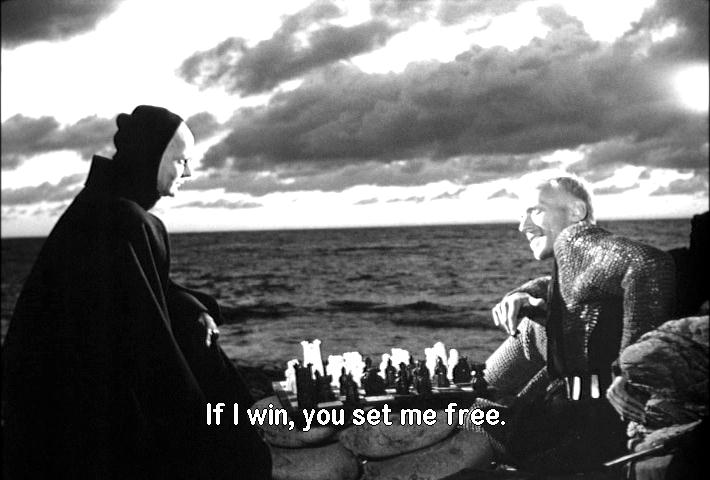
Image © Peter Whincop 2011.
When we walk home from school every night, across the bridge over the ex-river, just bed now, we wish certain things. Not for things, just things. Just. We look in the river. Not so much water there, just ice. Justice.
But our judgments are clouded. Or our cloudments are judged. Call me someone who lived through the 60s—okay Peter was born in the 60s but only just, and I am near to being born in the 80s. No that’s a lie, I wish. We are the same age—it must have been all that acid because I am seeing what they mean when they say you can see things in the clouds. I can see Kennedy’s assassination, and I don’t even know any of the details. It is a virtul history lesson, inchoate. I know it involved an incontrovertible—what sort?—and a building and a gun. I see now how tires are changed on cars, how all those Kiwis and Aussies died at Gallipoli, and if I bought a Tonka tank instead of a car and we (oops!) had a daughter as cute as Peter’s niece <em>>, then we could teach her how to drive it! Even in, or seeing a sand[pit|box] [-bull|-] -terrier. And I think I see a chemistry set for her tenth birthday bunsening away there, and a very pretty girl up there, very. Before we played in our sandpit as kids, we had to check it for cat poop!
Peter says he misses what he thought was you. He was floating on cloud nine. It’s not even that you encouraged people to play golf on the rooftops of our fine city, he could have dealt with that—sh!t fcuked up as. Oddly, I have just thought how strange it is that Harvard has kept the “fas” part of all College/Graduate School of Arts and Science email addresses, e.g. Peter was “whincop@fas.harvard.edu”; it used to be “husc”. But you were to him:–
Flower of this purple dye,
Hit with Cupid’s archery,
Sink in apple of his eye
—William Shakespeare, A Midsummer Night’s Dream
... of a storm, a blogstorm has been brewing like a cup of tea for two, like the two tease in that network channel, TNT, which, to sum up this sentence, are we being asked to first T the second T? Like teeing off the roof where (who? fun-lovers?) flog balls and hit on them. (“Flog” in New Zealand English means to steal, to hit, or to sell off cheaply.) I have exhibited great restraint. And on October 1st, some year, how about this for the screamplay:–
how much of us was real since my changed paintings and drawings reveal a lot but it would take years to analyze them and i am destroying everything you wrote to me physically and by computer because the little i have bothered to interpret has caused a complete identity breakdown which you have witnessed and in fact with others caused and i was supposed to cave but i didn’t even though i now realize the world is a truly despicable and dishonest and disingenuous place and if i am right about you then i despise you more than even you who are evil reified could possibly imagine and i shall not let that rest without converting it into actions which i cannot imagine anyone would especially like and i have to stop my research for the sake of my sanity because both obsession and the content have almost destroyed me in a way you had not planned on but i am far from ruined and i am well [prepared to fully recover] when the time comes and i feel that time is pretty much now and the big question that you could answer with the alternative being far worse by my researching further and you well know i am not that stupid even though you have been so full of misplaced hubris it is risible and i will find out even more and i know way more than you think i know
[There is no reference to bad contraptions, in case the Feds are wondering and listing, or waxing supercilious. We don’t use g*ns. Held them, yes. I’ve also been in an earthmover or groundshaker—I bet they can even do that, those impact and collision geophysicists—people think a meteorite is going to slam into our fair planet in 2012, scatological eschatology—and have operated some lever age or another—I don’t think it actually operated the machine/vehicle itself—but I wouldn’t trust me to do the subtler things of landscape gardening, I’d break the twigs in all the wrong places, push it one leaf too far.] Details were not going to be divulged here. No one knows who we are talking about, and if you do, you are wrong, go reckon again. Sometimes a kittypile is several miaows deep and some purrs too. And we are not talking. We are writing. We are not writing. We are tapping. (Check out our tumblr blog which has one of P’s compositions on it that has some boring detail about not talking or writing. Dumb.)
And then there is this, and I hope including the entire lyrics of a Loquat song is not naughty: I thought perhaps it was the other way around (read the lyrics), but, no. Well, perhaps now. But it was you, in innumerable ways, and I mean that in an ℵ1 measure. Generously. The whole quotation here is for academic reasons, as we are both music faculty, to the word, not to the letters (haven’t got that Ph.D., fifteen years down the track; I got the idiot’s Harvard A.M. degree which means I suck). I am smitten with the voice and songs of Loquat (the timbre of the guitar is a bit nasty, not to criticize the actual work of the guitar, but the engineer got better at it in the second then third album; the singer’s voice is amazing amazing, especially when notes are hit exactly—which she is does for sure, or with no shouting; all perfect in the following song), and they sing of such tortured types of woe, some might say facile, some might say difficult (or even difficile), even fruitless, I’d certainly say with a culture of women claiming their rightful turf, as sisters they should. I’m more for siblings and everyone, but, etc. And I know this is a kittypile of kittypiles. A veritable palimpets. I say, wear their t-shirts and wait for their next album. You’re just a dandelion seed, that flies through the air, randomly, and disappears....
You used to throw gourds out the window
And I’d cover my mouth, laughing
You’d eat your broccoli with ketchup and cottage cheese
We look kind of the same
But you're different because you’re a time bomb
You’re not my strawberry girl
I know I’m awkward around myself
But this isn’t fun anymore
You make me feel obsolete
And it’s taken so long for me
To ignore you
And I'm so proud of myself
I never could predict the moment
When I’d be thrown in the closet
And I’d be stuck in there for months
Sitting locked in the dark
Mushed into my clothes
I’m much too afraid to ask you
To let me out of here
And start over without you
—Loquat, “Time Bomb” (Before the Momentum) [© attribution]
I don’t know if a disclaimer is necessary or not. And this just in, hot off the 1912 press, by Joe Hill, a Swedish immigrant, an itinerant laborer who was active in the IWW. He made up the now-famous expression:–
He then goes on to attack the Salvation Army and their hymn “In the Sweet Bye and Bye.” I wanted to use a nickname for them, since we call them the Sallies in NZ, but I see here they are the Sally Ann. One of the first links I clicked was alt.lawyers (cached in case this one bites it; this is true for everything I include), presumably as old as usenet itself. Ah, those lawyers, never can tell with language like that. Must have used more than just uuencode (from the man page: “Uuencode and uudecode are used to transmit binary files over transmission mediums that do not support other than simple ASCII data”—that has me thinking back to soundfiles...). And the Wikipedia page on Usenet has, as with most things freely dispersing around the internet appearing not to make money, the most amazing diagrams, which I will reproduce, with a wink in my left eye. (The right one got an apple jammed in it. Kind of got shoved in my mug. In fact, a crabapple. Yeah, that’s it, crabapple jelly and custard pie.) (I also wonder about buildings changing hands for big bucks but never a lot being done with them. Useful for the fourth of July, to get a good view I suspect—Cambridge/Boston’s fireworks are amazing, with pyrotechnic cubes and happy faces from the 60s and also numbers—or even for the finale in V for Vendetta, which I imagine 43% of MIT’s student population might like. Oh, meta-Google “Google Ron Paul” or go to http://www.apfn.net/ (or .org), a not-OTT fantastic web site in general, good essays. The first of its kind, I think. The video on how good capitalism is is a hoot.Long-haired preachers come out every night,
Try to tell you what’s wrong and what’s right;
But when asked how ’bout something to eat
They will answer with voices so sweet:
You will eat, bye and bye,
In that glorious land above the sky;
Work and pray, live on hay,
You’ll get pie in the sky when you die.
...
—Joe Hill, “The Preacher and the Slave” [© attribution]
Oh, here is the Wikipedia Usenet main map:

The other two diagrams

“A diagram of Usenet servers and clients. The blue, green, and red dots on the servers represent the groups they carry. Arrows between servers indicate newsgroup group exchanges (feeds). Arrows between computers and servers indicate that a user is subscribed to a certain group and reads or submits articles.” [From Wikipedia, “Usenet.” Benjamin D. Esham, the copyright holder of this work, published it under the Public Domain license.]

“A visual example of the many complex steps required to prepare data to be uploaded to usenet newsgroups. These steps must be done again in reverse to download data from usenet.” [From Wikipedia, “Usenet.” Licensed under the Creative Commons Attribution-Share Alike 3.0 Unported, 2.5 Generic, 2.0 Generic and 1.0 Generic license.]
*And just because, I wanted to find a Latin translation of “yadda yadda,” as I saw it in an excellent book recently. I think it was borreo, fascio, or something like that, but I couldn’t find the idiom. I did, however, find this. I think there needs to be a theorem a little more sophisticated than the four-color map theorem: we need a wherefore color map theorem that not only proves things about figure–ground colorings, but about boundary conditions of colors in general, using endomorphisms, orbifolds, and graph theory. I will be posting on maps in the next fortnight (I was too weak to thing of the American term); I have a number of old maps, and books on maps, and looking down on earth from space I doubt has one in awe for any reason other than for its awesomeness; looking down on maps of countries, or counties, or heroin trafficking routes (there’s a great French cartographer who produces remarkable maps of “transportation”—the cotton trade, Hannibal’s tour of Europe, etc. and I will bring in many examples from him. And after that, unusually coded, or claimed-to-be-coded, texts, such as the Voynich manuscript—I thought it was “Voisnitch”!—and the Codex Seraphinianus—I have a tumblr-to-be blog post on that incredible Codex), bemuse me, like the pieces are put together in such a way that... you’ll see. It has in a painful way fascinated me for years. Again, as this is a slightly anachronistic editing effort, on my Tumblr blog, which runs parallel to this but the two never duplicate each other, I have music, Peter’s, since we haven’t worked out how to do it on Blogger. One piece talks about strange things, include maps. Briefly, but it’s the context, and what a con-text it is. (Our own site, anon-∞, has links to all these pre-figured blogs, sites, bookmarking things, social networking sites to be ignored, sites for posting sounds, music, and art, a writing publishing site, etc.)

Incidentally, my astrological sign is Taurus. The Bull. Makes me stubborn. And mine is Aquarius. The water bearer. Makes me bloated. [© attribution]